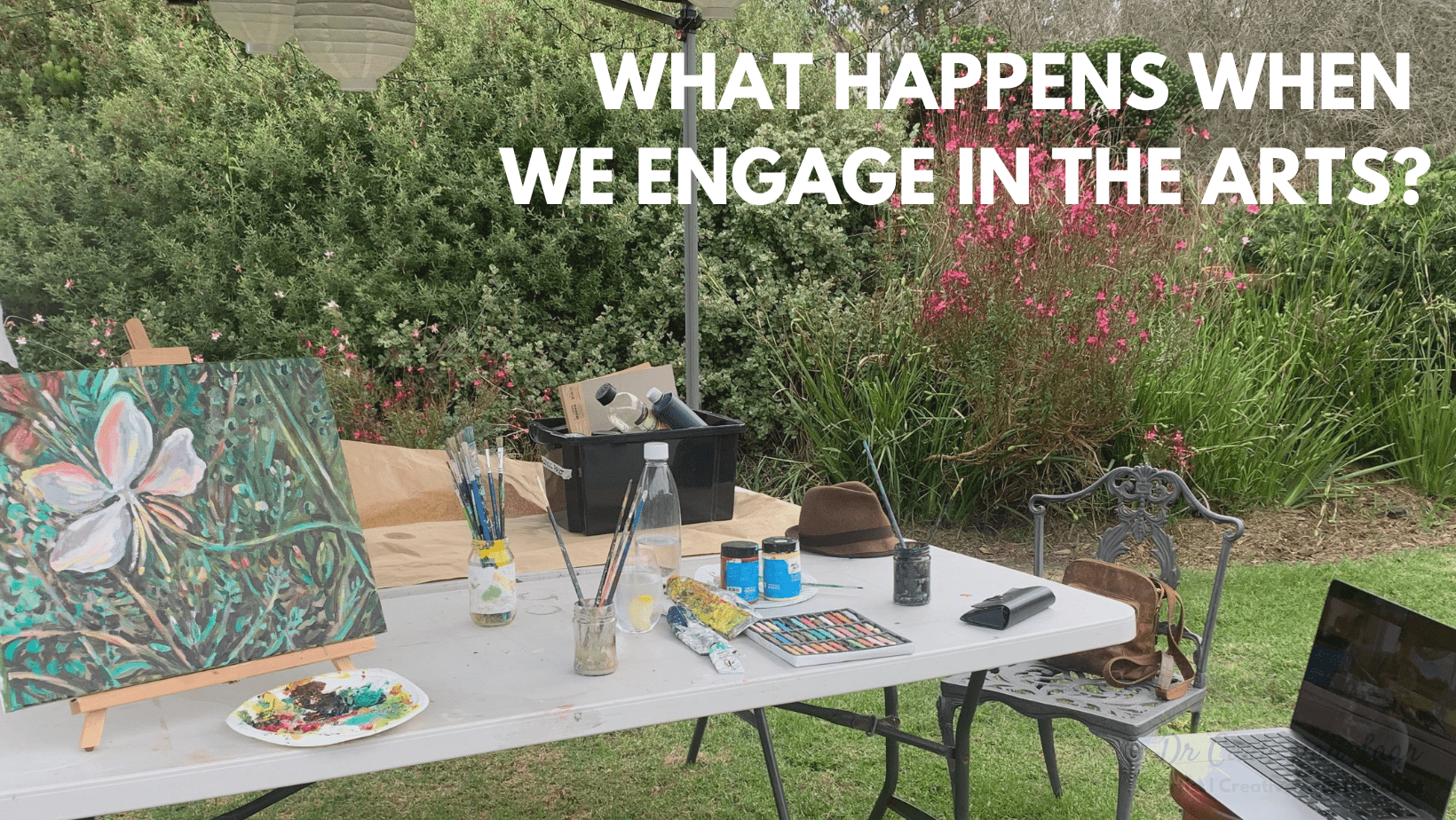
A newly published review in Nature Reviews Psychology brings together interdisciplinary research to map the mechanisms through which arts engagement supports mental health. Rather than offering a single explanation, the authors identify around 50 interacting mechanisms across emotional, cognitive, biological, social and behavioural domains. They are understood as interconnected, co-occurring, and context-dependent. … Read More
#culturalpolicy
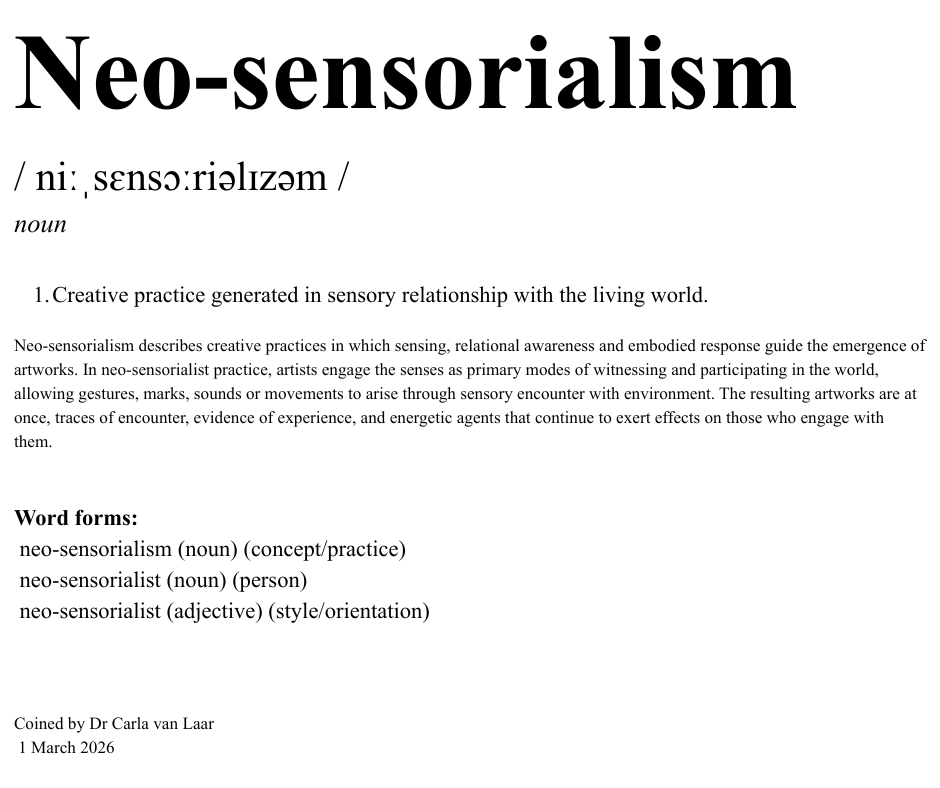
Neo-sensorialism
Neo-sensorialism (noun)
The arts-based practice of engaging the senses as primary modes of witnessing, being in relationship with the world, and creatively responding to experience in the present moment.
The term Neo-sensorialism was introduced by Dr Carla van Laar (2026) to describe creative practices that cultivate sensory awareness, relational engagement and creative response as integrated ways of knowing.
… Read More
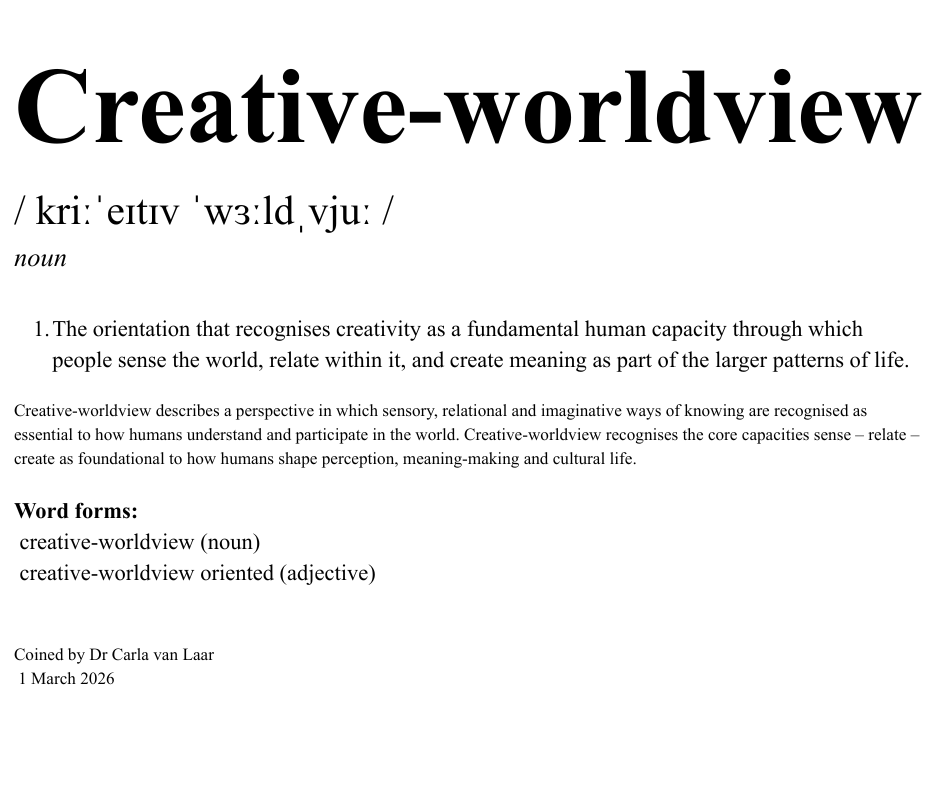
Creative-worldview
Creative-worldview describes a perspective in which sensory, relational and imaginative ways of knowing are recognised as essential to how humans understand and participate in the world. Creative-worldview recognises the core capacities sense – relate – create as foundational to how humans shape perception, meaning-making and cultural life. … Read More
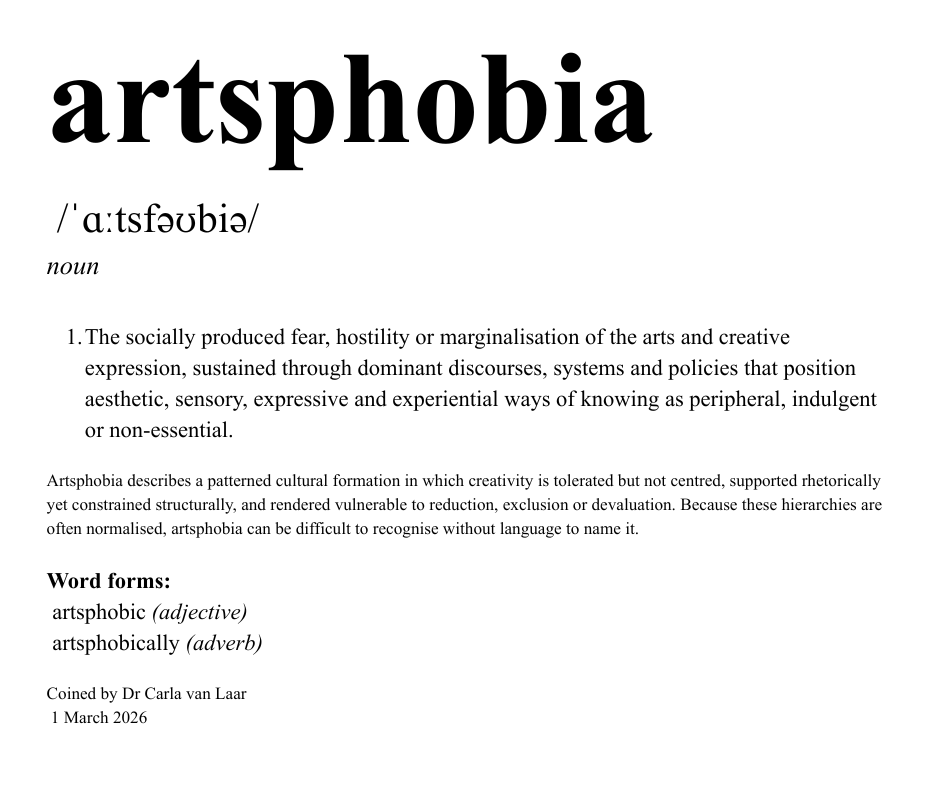
artsphobia
Artsphobia is the socially produced fear, hostility or marginalisation of the arts and creative expression. It operates through dominant discourses and policies that position aesthetic, sensory, expressive and experiential ways of knowing as peripheral, indulgent or non-essential — normalising their devaluation and rendering that marginalisation invisible or inevitable. … Read More