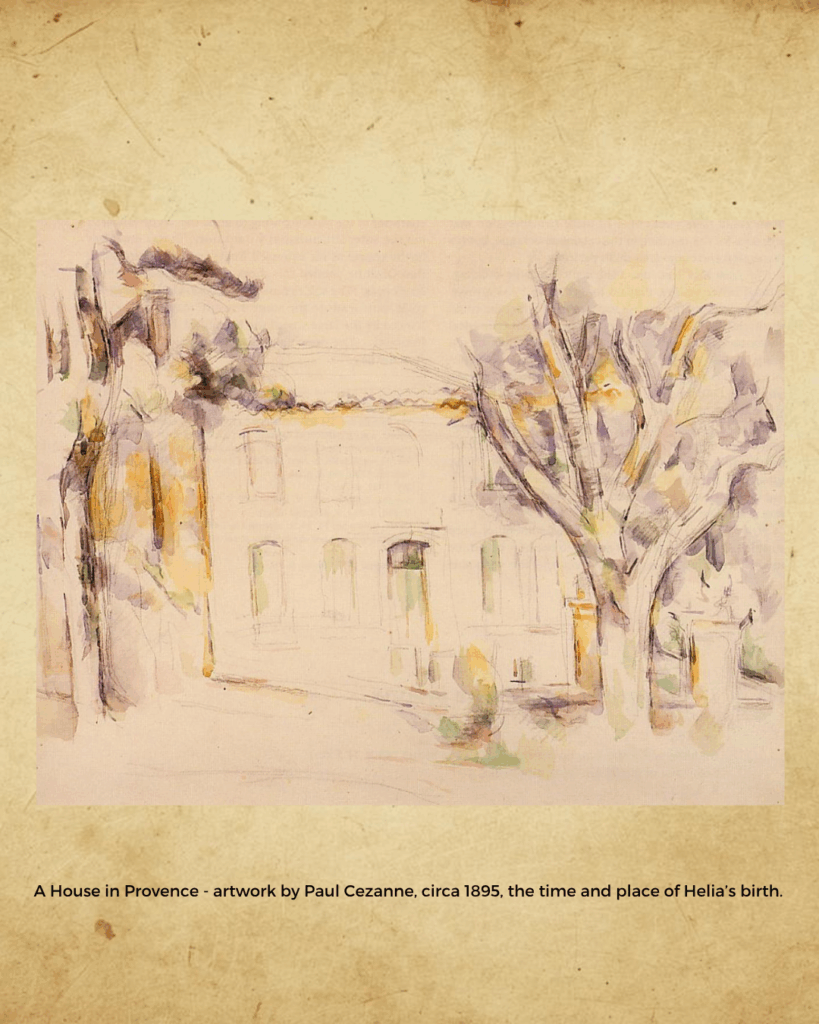
From what I gather, Helia Hart was born beneath the wide skies of Provence, France, in 1895, her mother a painter and her father a sculptor, she was the daughter of two artists who taught her to see not only form and colour, but the invisible threads between things.
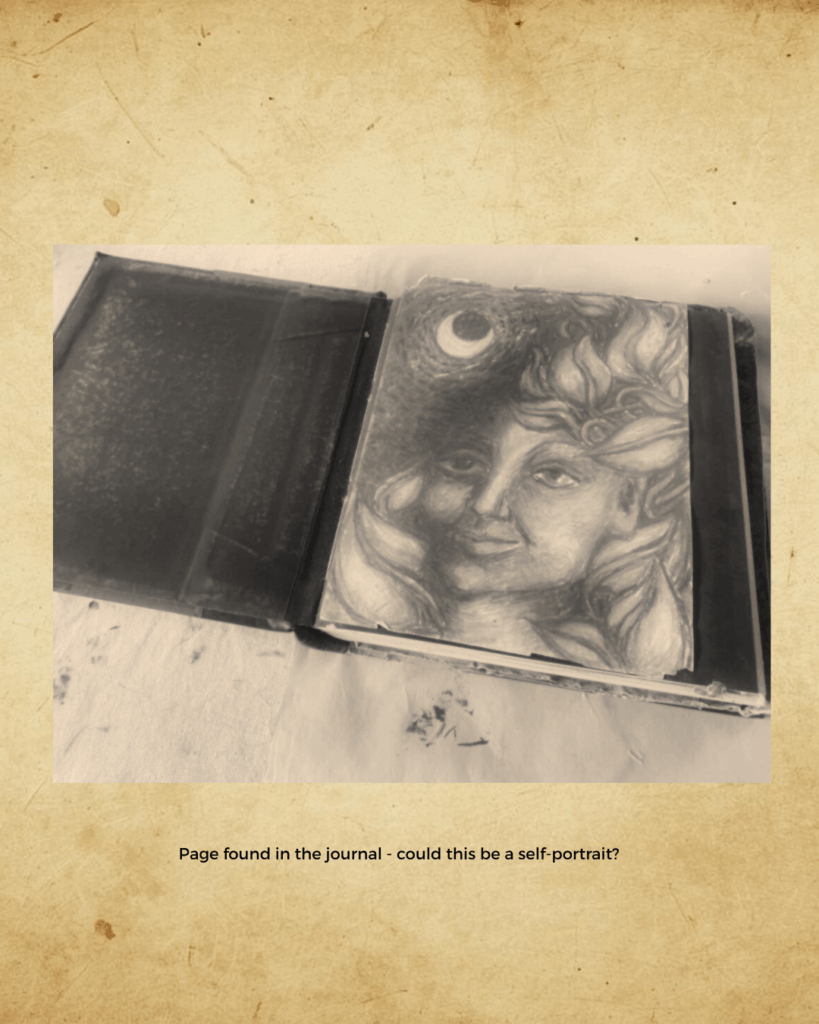
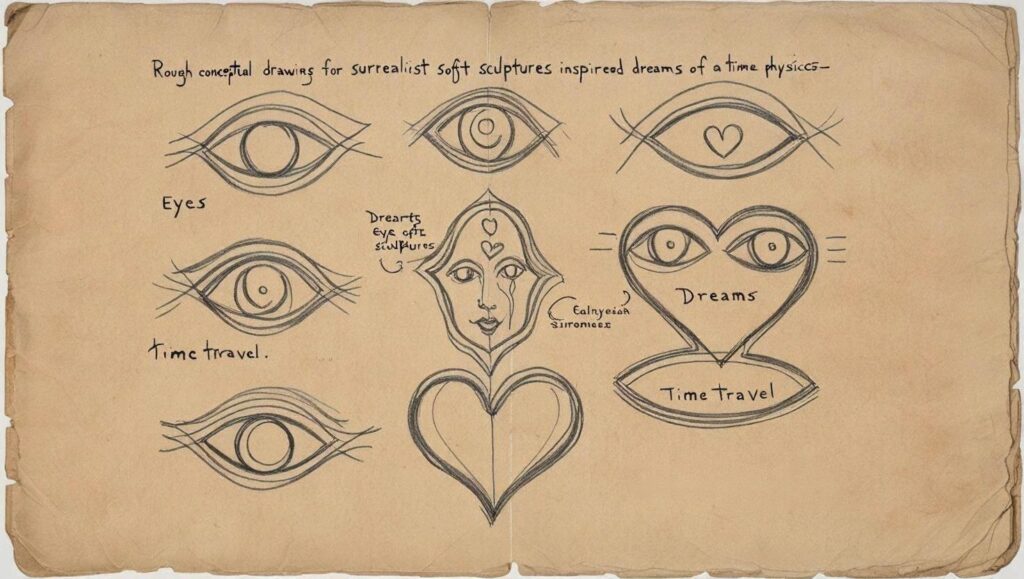
Her journal reveals that in the early 1920s she had been drawn to Paris, and immersed in the energy of the Surrealists, shaping her own soft-sculpture objects that shimmered with dream-logic and longing.
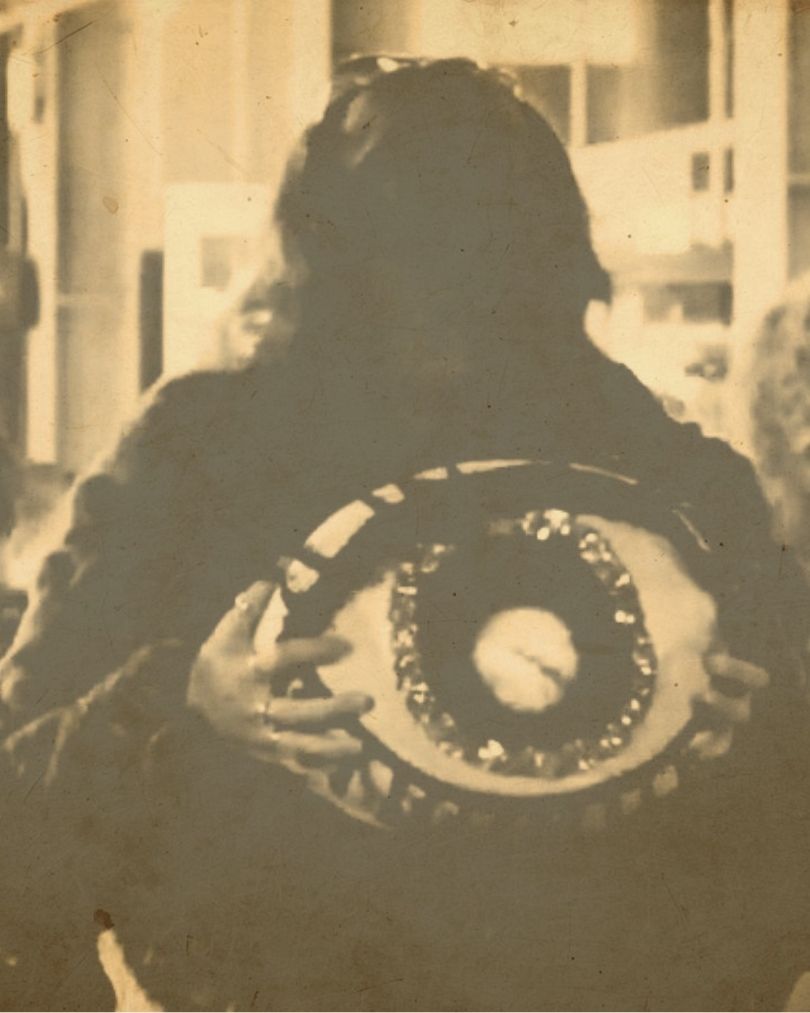
Her most mysterious creation was a soft sculpture she called the Heart Sonic Artlifier — an eye-shaped form, stitched with intention to amplify empathy and blur the line between art and life.
Being a highly sensitive soul, Helia began to feel Europe becoming unsafe, firstly for herself as a woman creative, and then, along with her contemporaries, artists who started to experience the tremors of persecution, Helia fled. While many of her peers sought America, she came further still — to Australia, where her story would vanish into local history.
Pine Lodge
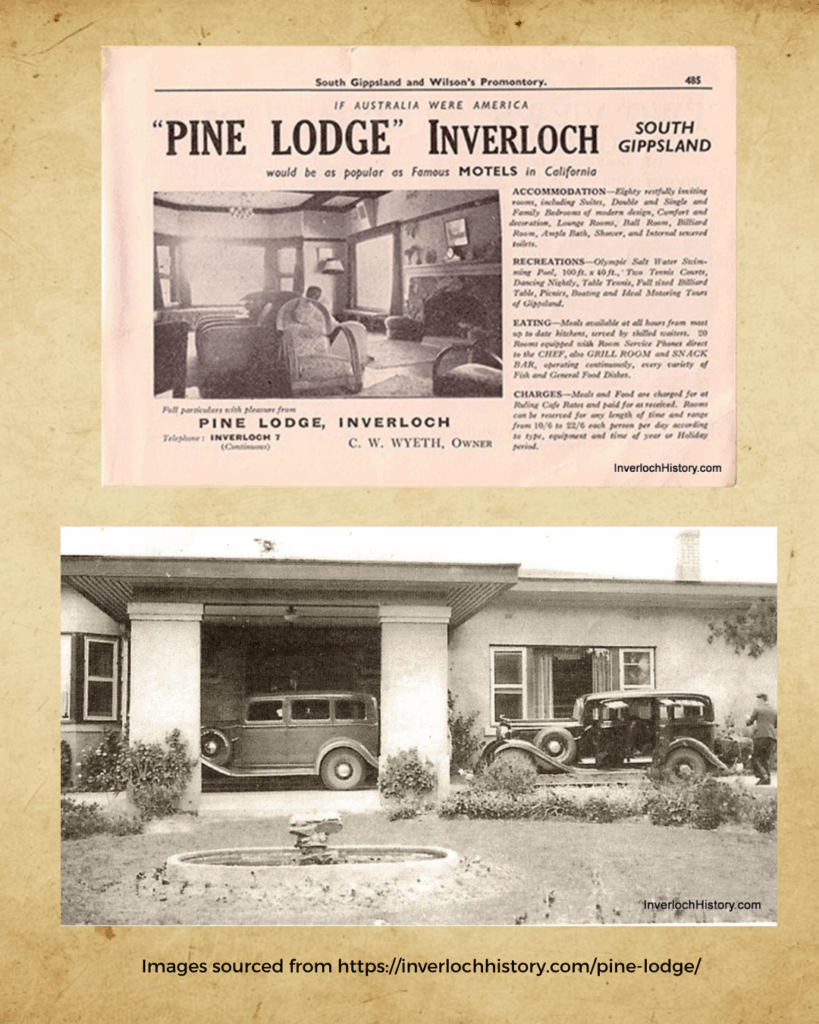
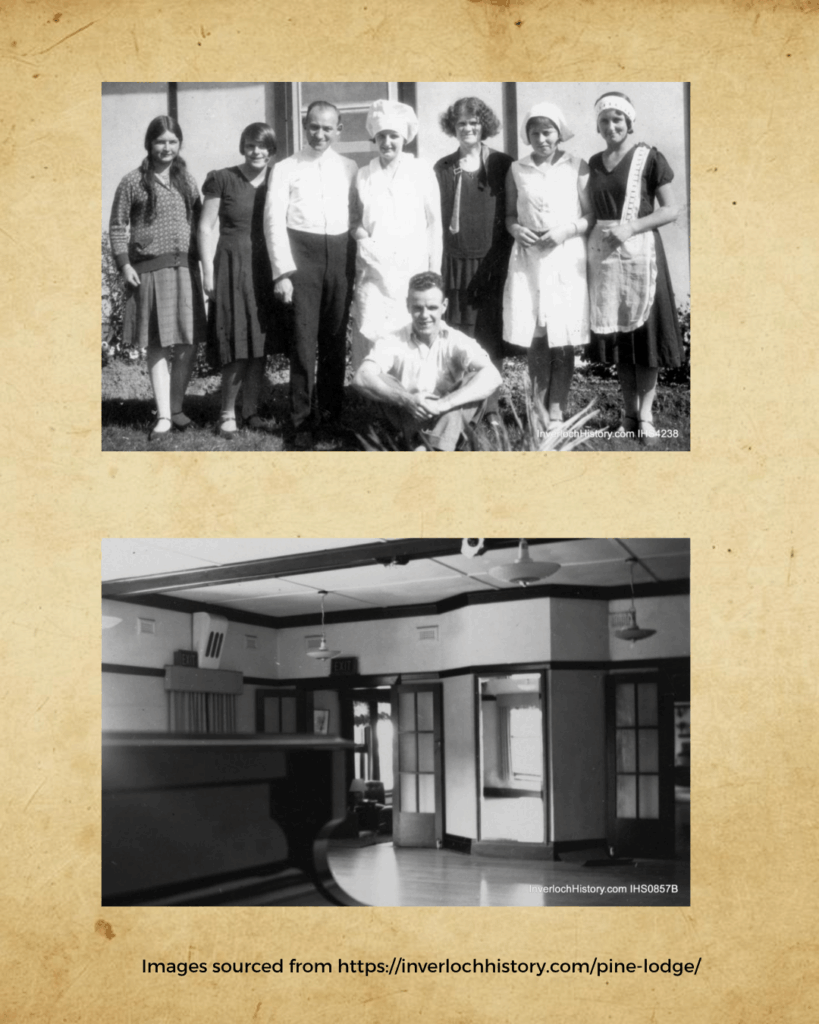
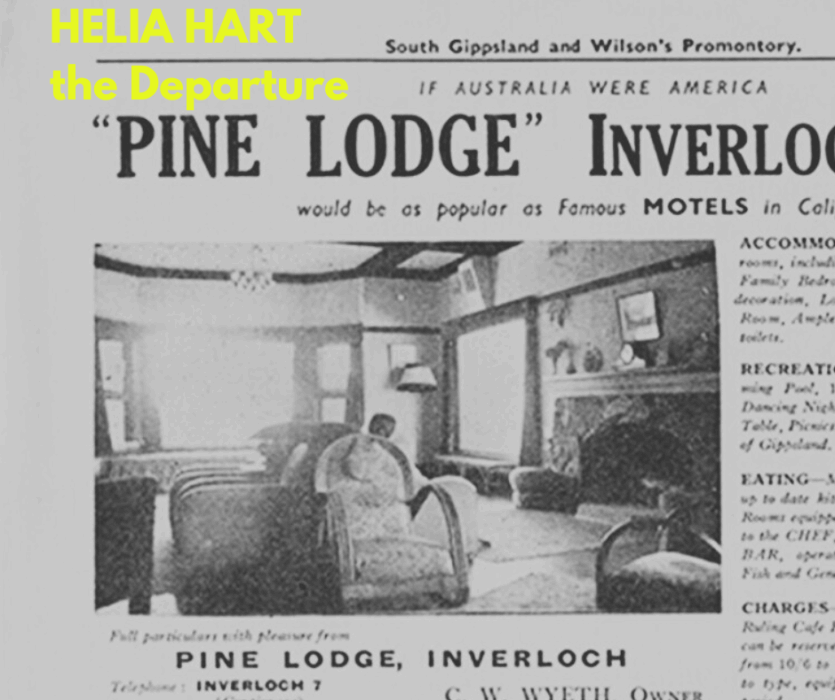
There was, in those years, a place at Inverloch called Pine Lodge. Built in 1930 by Cal Wyeth, it was famed as a playground for the wealthy: seven acres of lodge-style glamour, with a ballroom, tennis courts, horse riding, and even an Olympic saltwater pool. Every car had its own garage, menus were written in French, and a Hungarian chef was brought down from Melbourne to provide cosmopolitan refinement.
It was here, in this unlikely resort by the sea, that Helia reappears. She worked first as a French cook, preparing meals for the gentle people who danced in the ballroom and strolled the shaded drives. Her artistry was quiet — arranging food as though it were painting, tending flavours with the precision of a sculptor’s hand.
When war came and Pine Lodge was requisitioned as a Naval Hospital, Helia’s role shifted. The same hands that once plated delicate meals now laid out brushes, clay, and fabric. She opened an art studio in the former ballroom, inviting returned servicemen to create. In that space, she wove surrealist imagination into the rhythms of rehabilitation, and veterans who might never have called themselves artists found healing in line, colour, and form.
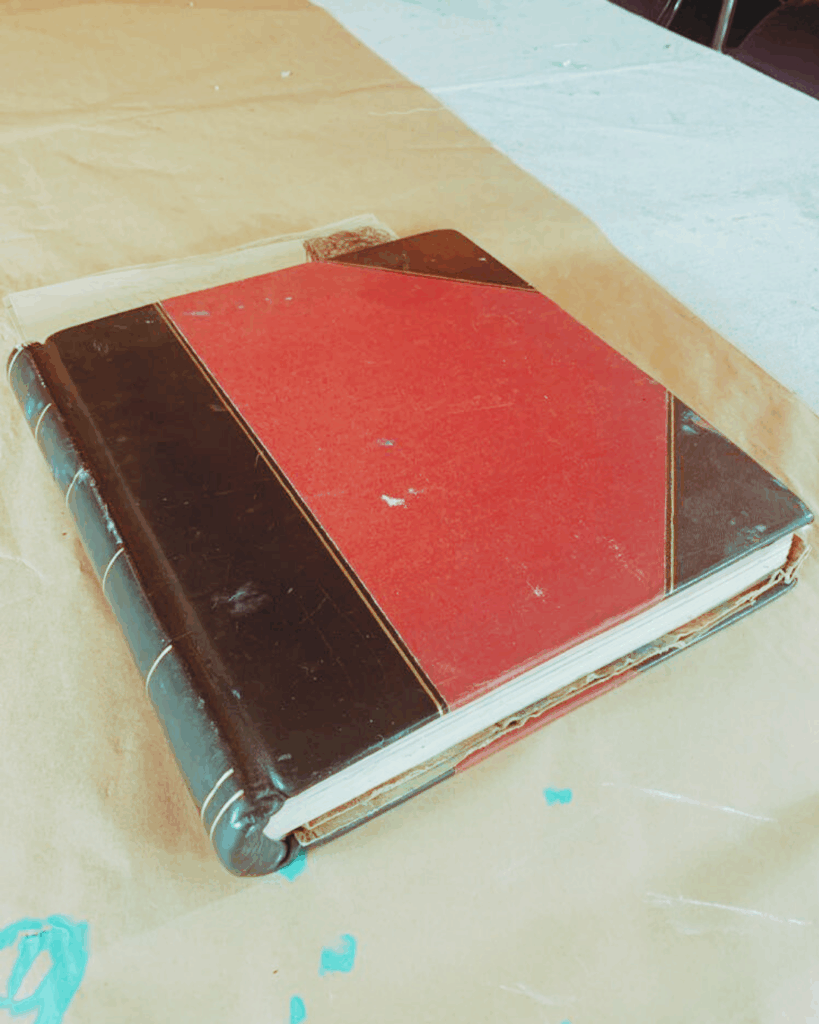
That is how her journal — long forgotten — found its way into the Inverloch RSL storeroom. Decades later, veterans who remembered her name would leave behind whispers of “the French cook who turned to art.”
The Country she found Herself in
Helia’s story is just one thread, resting lightly on a place with a far older and deeper story. This is beautiful, ancient Boon Wurrung or Bunurong Country, home to the Yowenjerra people. At the time of her arrival, their culture had been brutalised and fragmented by the land theft and attempted genocide of white settlement and colonisation. Families were broken by violence and removal; colonial stories claimed that the Bunurong people had died out.
Yet matriarchs survived, protecting knowledge that had to be hidden, passed down quietly in cultural practices and stories shared away from the gaze and ears of the oppressors. Women and children were stolen, yet in time some would return, finding their way back to this Country to unearth stories in buried artefacts, to regenerate language, culture, and healing practices.
Helia’s journal suggests she felt this — that beneath the salt air and the walls of Pine Lodge, the land itself was speaking. She could not claim that knowledge, but she sensed it. Perhaps that is why her Heart Sonic Artlifier resonated here, where resilience and love had been practiced for thousands of generations, even through the deepest shadows of loss.
The Journal
I was handed that old hand-bound journal myself, because of my own work with veterans in Inverloch through the Ocean, Art & Mindfulness program. The RSL asked if I might be interested in its curious contents. Its pages spoke of Pine Lodge, of soldiers sketching between treatments, of Helia’s belief that creativity could hold a human spirit together when war had broken everything else.
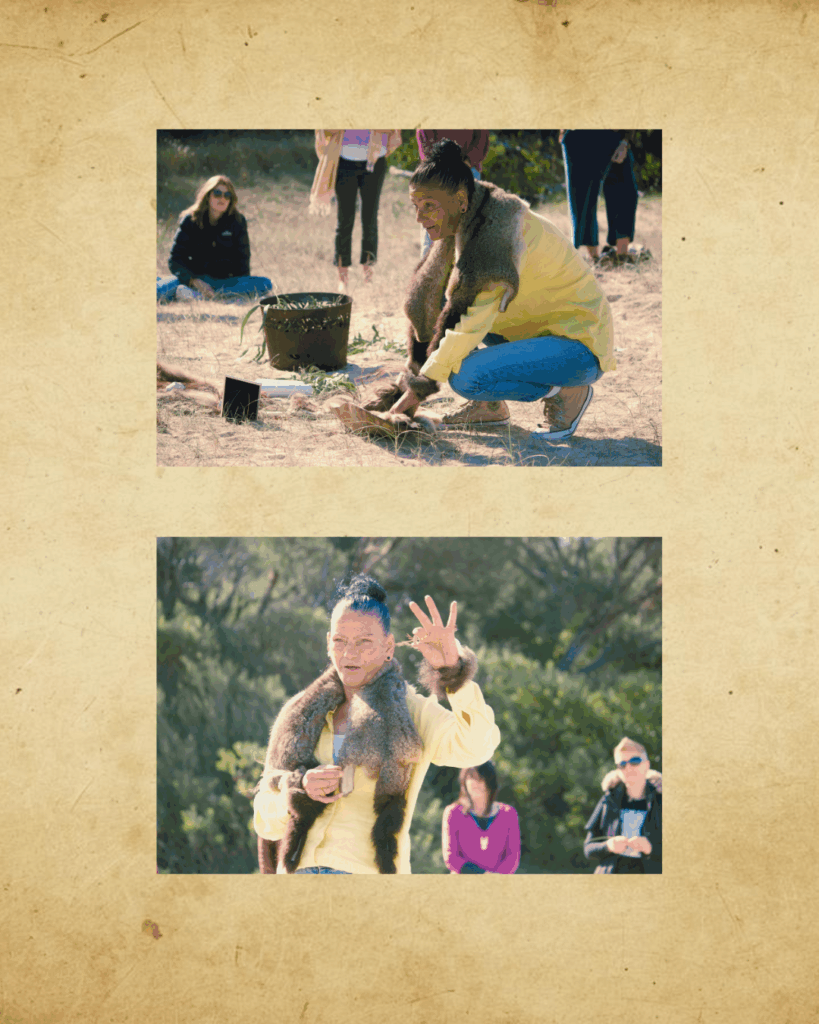
This is the story I was so eager to share with a significant gathering of artists and therapists in 2025. It was the opening night of the 2025 Creative Mental Health Forum in Boon Wurrung Country, Inverloch. Earlier that afternoon, we had all received our Welcome to Country and cleansing smoking ceremony from Aunty Sonia Weston (pictured above).
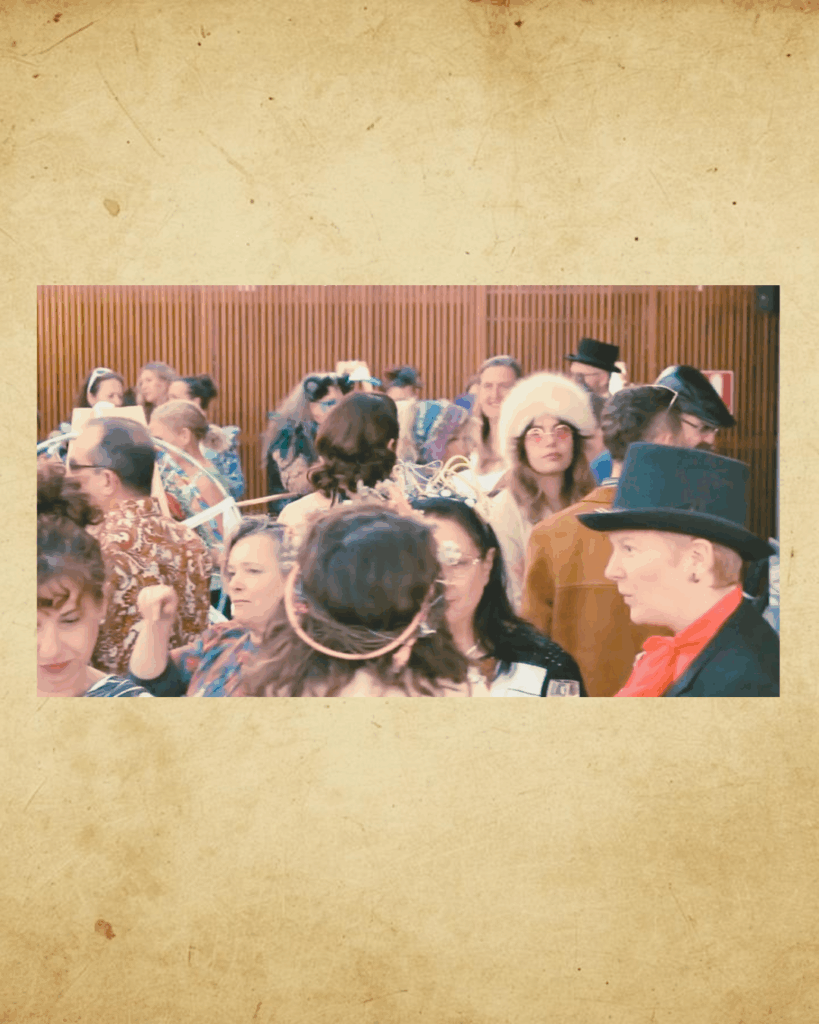
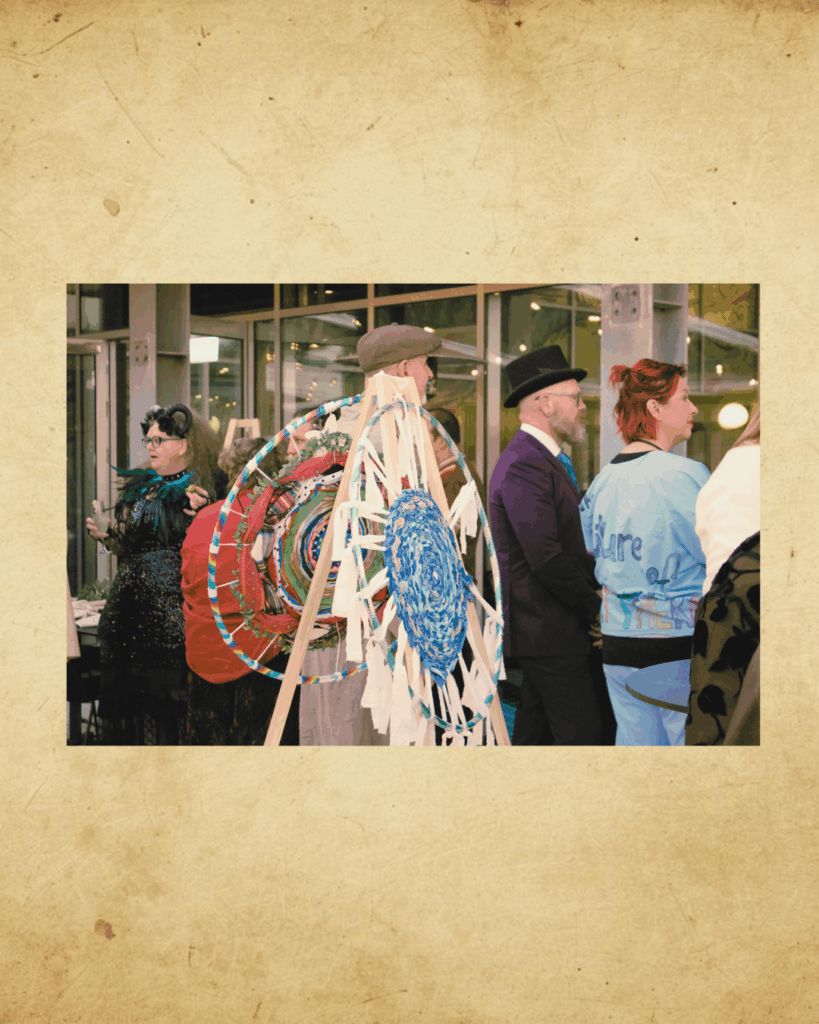
For the opening night, we had gathered together for the Welcome Cocktail Party, with a theme of “Time to Connect”, and guests invited to dress in cocktail costumes from any era. We were surrounded by a series of artworks made by the party guests themselves, an improvised collaborative community installation of sculptures all created from large round hoops. It was as though we were all encircled by portals to other, creative, dimensions.
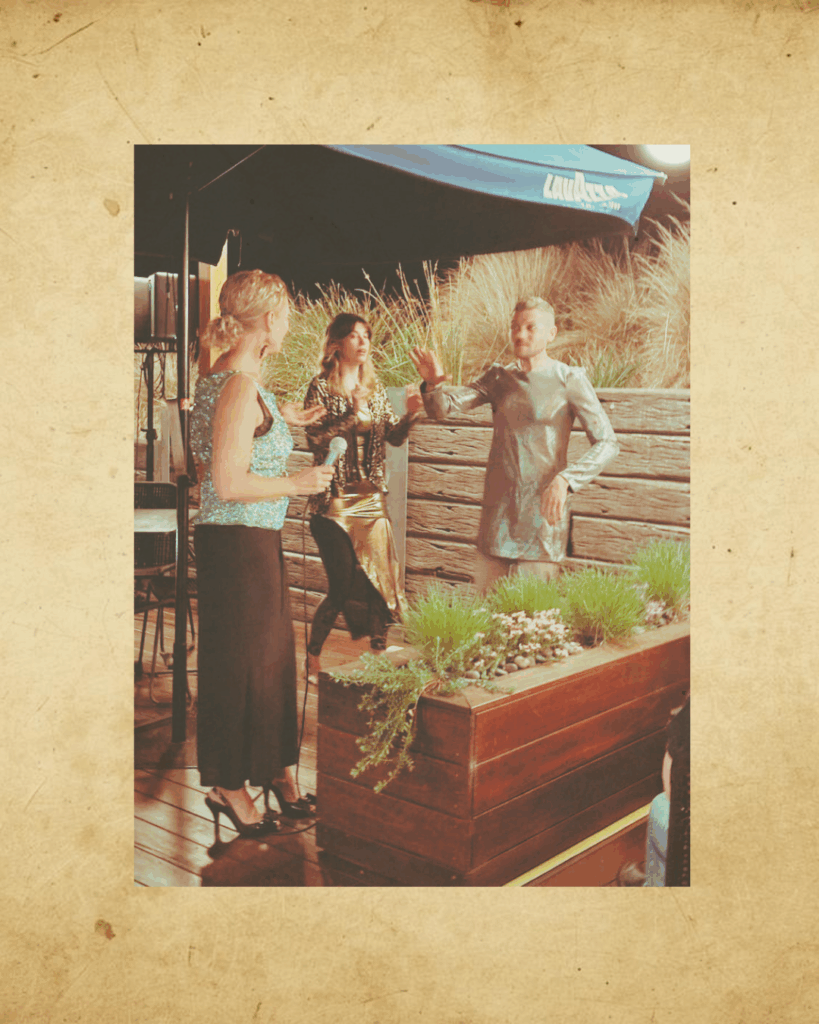
I held the journal in my hands as I addressed the gathering, I was so excited to share Helia’s story as I imagined it would intrigue and inspire everyone there. However, just as I began the tale, I heard a crash behind me. Everyone’s attention was diverted to a pair of figures falling down the raised garden bed behind me, landing in to our party as they brushed themselves off and stood to reassure the guests that everything was OK, introducing themselves as Hori and Zon.
Visitors from the year 2525.
The Chronicles of Helia Hart is a work of fiction, inspired by true facts;
of things – such as historical events, gatherings, art movements and feelings – that really happened,
in places – such as geographical locations, significant sites, and imaginations – that really exist,
in times past, present, future, and all at once.
Dr Carla van Laar creates the Chronicles of Helia Hart on BoonWurrung Country, Inverloch, Victoria Australia.
Carla is an artist, therapist, author and activist who is passionate about the power of the arts and creativity to heal our beautiful but troubled world and hearts.
Leave a Reply